

VectorED Network · Evaluation Programs
Host-Targeted Control: Topical Application
Evaluating fluralaner applied topically to rodents as a host-targeted strategy for reducing tick populations and interrupting tick-borne pathogen transmission.
About This Project
Ticks depend on small mammal hosts, particularly rodents, during important stages of their life cycle. This project evaluates the use of fluralaner, a systemic acaricide administered topically to rodent hosts, as a host-targeted approach for reducing tick populations in residential and natural landscapes in western Pennsylvania and Ohio.
By treating rodents that serve as key hosts for immature ticks, this strategy aims to reduce tick survival and interrupt the transmission cycle of tick-borne pathogens — including Borrelia burgdorferi, the causative agent of Lyme disease — while minimizing impacts on non-target organisms and the environment.
The evaluation will be conducted through a large-scale field study across sites in Ohio and western Pennsylvania, assessing fluralaner's effectiveness in reducing the prevalence of Ixodes scapularis nymphs and pathogen infection rates in questing ticks.
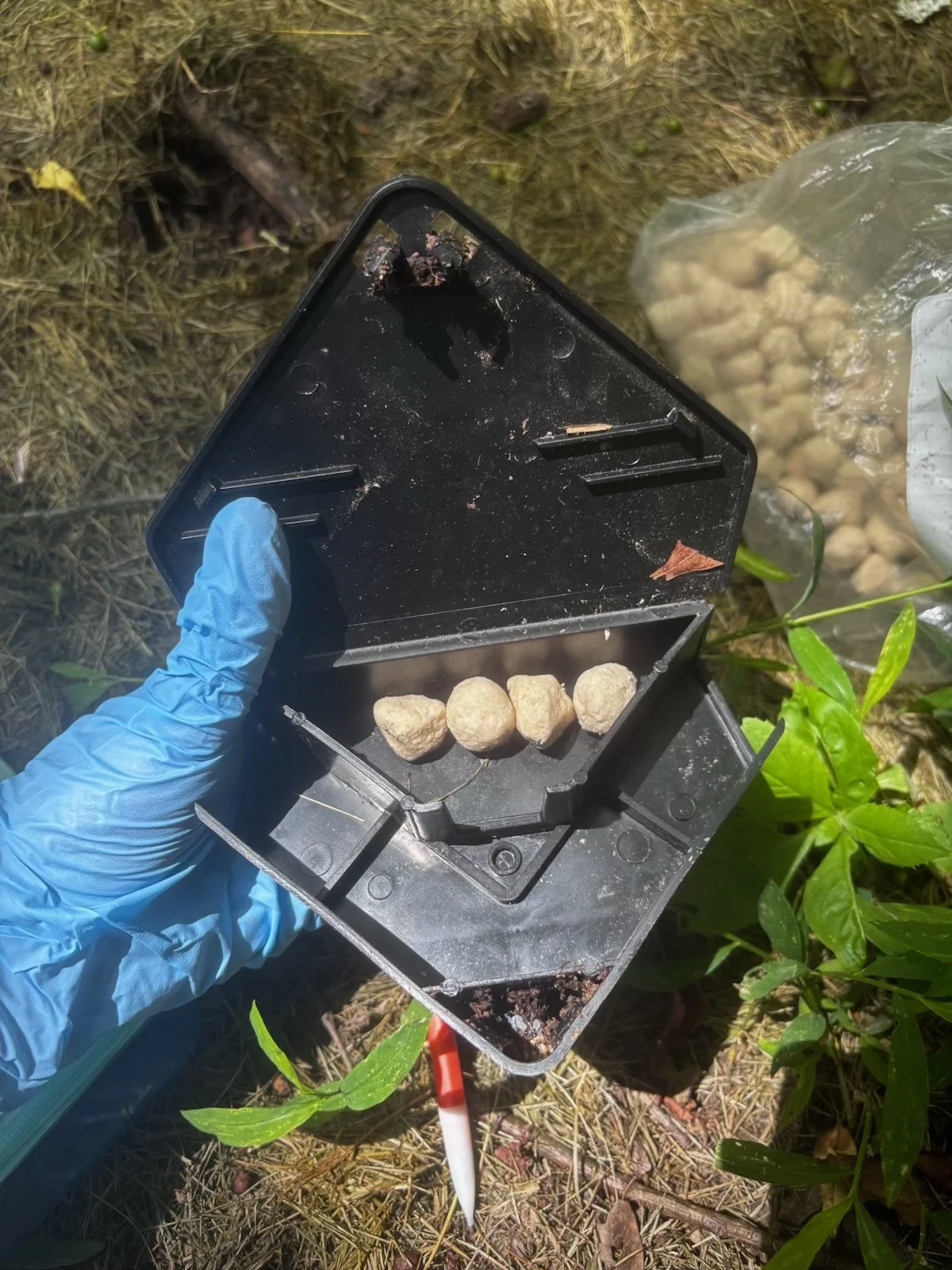
Bait box and bait used for field project evaluating fluralaner for tick management on small mammal hosts.
What Are the Goals of This Project?
Evaluating a Novel Host-Targeted Approach to Tick Control
This research will determine whether fluralaner-based host-targeted treatments are a viable tool for reducing tick populations and lowering the risk of tick-borne diseases across residential, recreational, and natural areas in the region.
Specific Objectives
Evaluate the effectiveness of fluralaner-treated rodents in reducing local tick populations.
Assess the potential of fluralaner as an alternative active ingredient for host-targeted tick management programs.
Compare this approach to existing host-targeted tick control methods and determine its suitability for long-term integrated tick management.
Generate data to inform future recommendations for residential, recreational, and natural area tick control.