

VectorED Network · Evaluation Programs
Host-Targeted Treatments: Tick Tube Evaluation on Public Lands
Evaluating tick tubes as a large-scale tool for reducing tick density and Lyme disease pathogen prevalence on public lands in Pennsylvania and Delaware.
About This Project
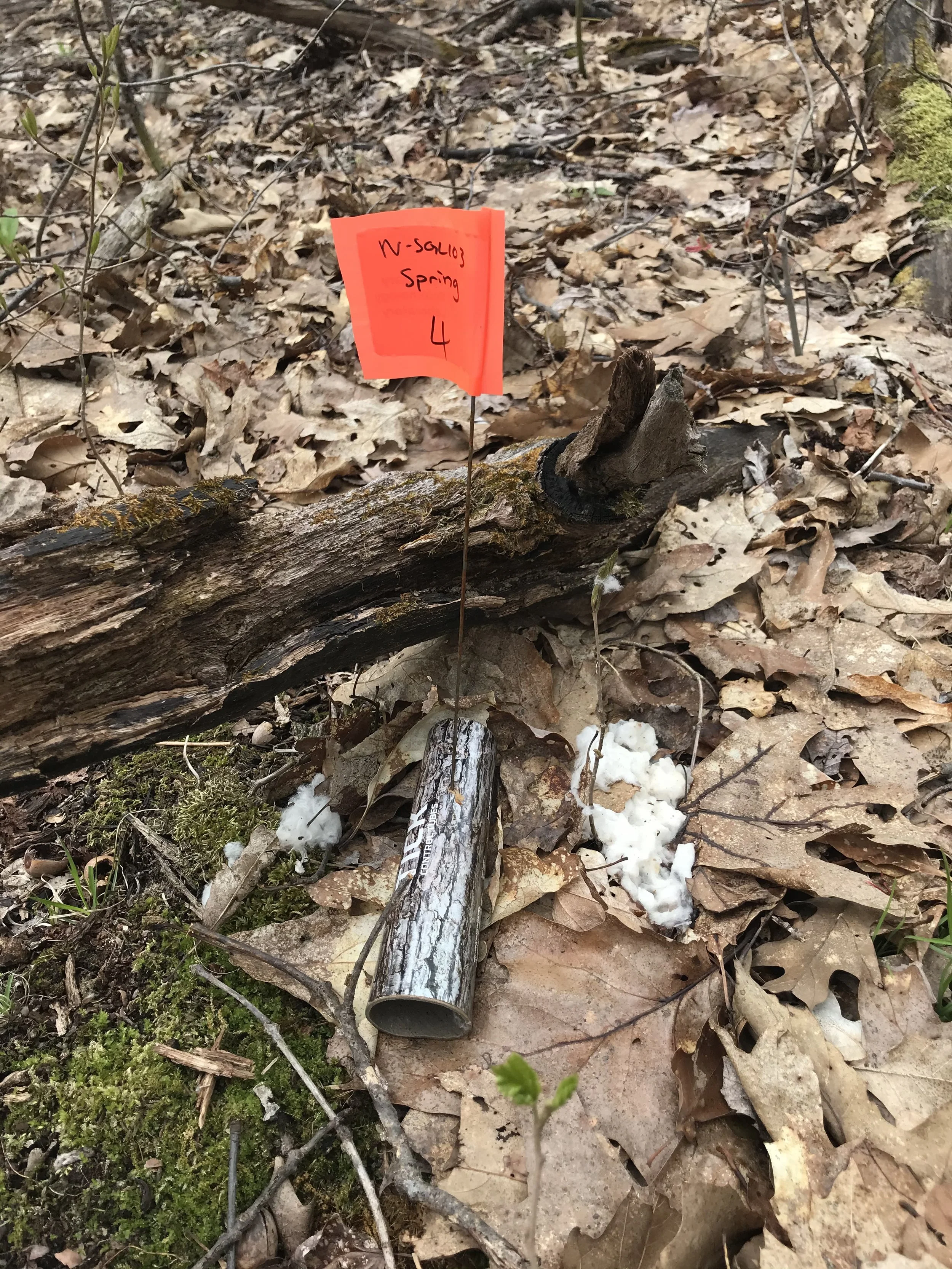
Tick tubes are a host-targeted approach to tick management. They leverage mice's natural behavior to gather materials for their nests. The tubes provide permethrin-treated cotton, which mice incorporate into their nesting sites, effectively killing ticks on the mice and within their nests.
Following several years of optimization, this evaluation will assess the large-scale efficacy of tick tubes for use on public lands, aiming to decrease the risk of pathogen transmission from infected ticks. The project focuses specifically on reducing populations of Ixodes scapularis nymphs and the prevalence of Borrelia burgdorferi, the bacterium that causes Lyme disease.
This is a multi-year project conducted across sites in western and central Pennsylvania as well as Delaware. The geographic spread is intentional — by working across regions with different forest composition, rodent communities, and habitat structures, the study is designed to evaluate how local ecology influences the efficacy of tick tubes. What works well in one landscape may perform differently in another, and understanding those differences is key to developing effective, site-appropriate tick management recommendations for public land managers.
What Are the Goals of This Project?
Reducing Tick Density and Pathogen Prevalence on Public Lands
The goal of this project is to evaluate the large-scale effectiveness of tick tubes in reducing tick density and Borrelia burgdorferi prevalence in questing Ixodes scapularis nymphs on public lands. Over four years, tick tubes will be deployed in Pennsylvania and Delaware, with treatment and control plots monitored throughout.
Specific Objectives
Measuring Cotton Use
To quantify the amount of cotton used by mice, material loss from deployed tick tubes will be weighed over the course of the study to track uptake rates across sites and seasons.
Quantifying Rodent Density
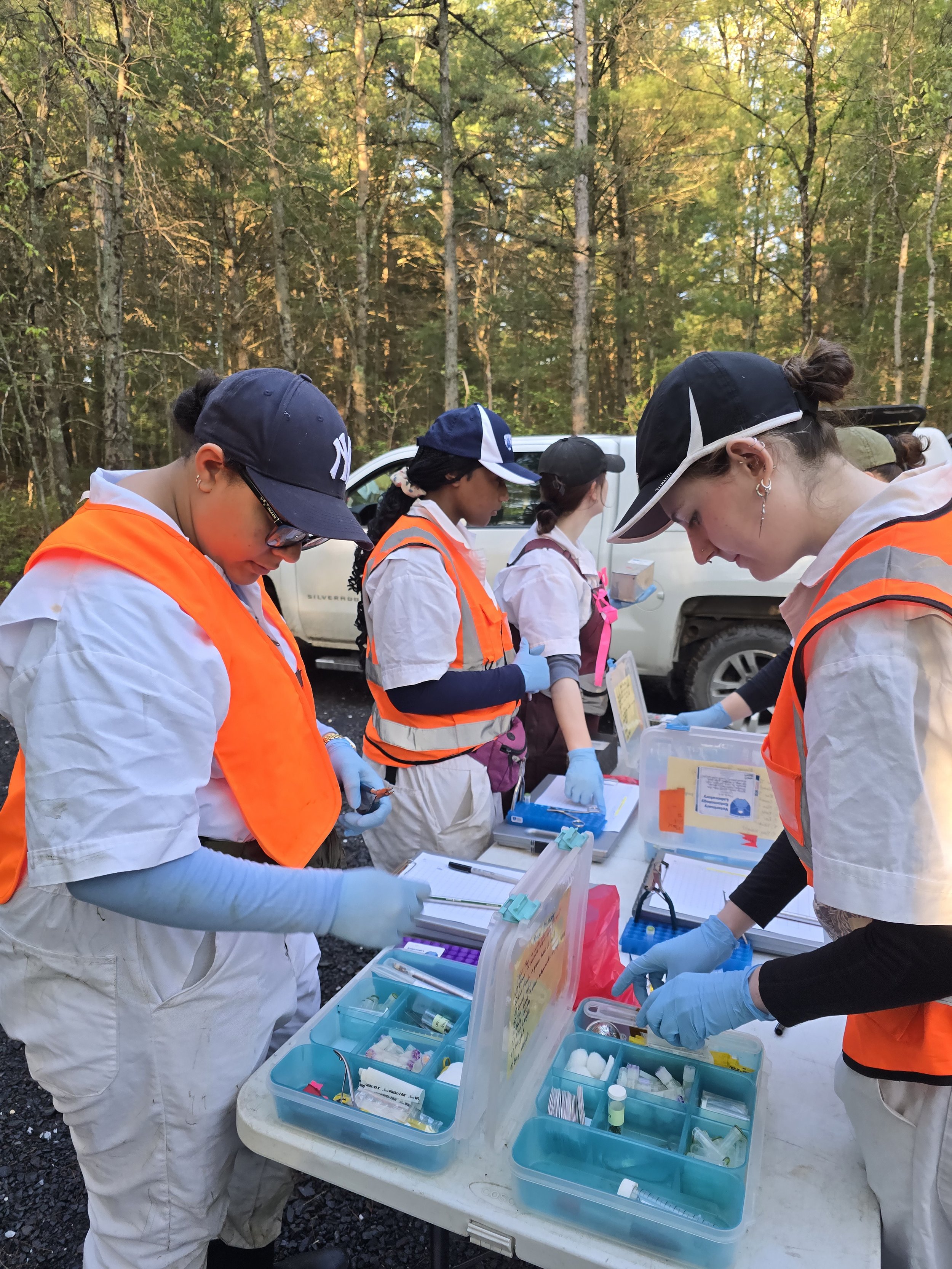
To make accurate comparisons across treatment and control plots, rodent density will be calculated using mark-release-recapture methods for white-footed mice.
Evaluating Questing Tick Numbers
CDC drag methods will be used to collect ticks in treatment and control plots throughout the study period, measuring the effect of tick tube deployment on questing tick density over time.
Pathogen Testing
Collected ticks will be tested for pathogens associated with tick-borne diseases to evaluate the impact of tick tube deployment on pathogen circulation within treated areas.